Buy Tsavorite, Gemstones & Soda Ash from Kenya: A Licensed Supplier Guide
How to buy Kenyan gemstones and industrial minerals legally — permits, valuation, lab reports — and the warning signs of scams.
Read guide →
Product 08 · Export from Kenya
Kenya hosts world-famous coloured gemstones — notably tsavorite green garnet, first discovered in Taita Taveta — together with industrial minerals such as soda ash from Lake Magadi, and artisanal and small-scale gold.
Mineral and gemstone exports are tightly regulated in Kenya under the Mining Act 2016. Every shipment requires licensed dealers, valuation by the State Department for Mining, payment of royalties, and an export permit. We only work with licensed miners and dealers, conduct KYC on every buyer, and follow OECD due-diligence guidance for responsible mineral supply chains.
Gemstones are offered as rough and selected cut stones. Industrial minerals are supplied in bulk by sea from Mombasa. Gold is handled only through fully licensed, refinery-ready channels with assay certification and banking-grade documentation.
Typical buyers: Licensed mineral traders, gem cutters, jewellers, refiners, manufacturers and industrial users.
8 types available. Specifications are typical; exact parameters are confirmed per lot on the quotation and certificate of analysis.
Type 1 of 8
Kenya's signature gem from Taita Taveta — vivid green, high brilliance. Rough and calibrated cut stones.
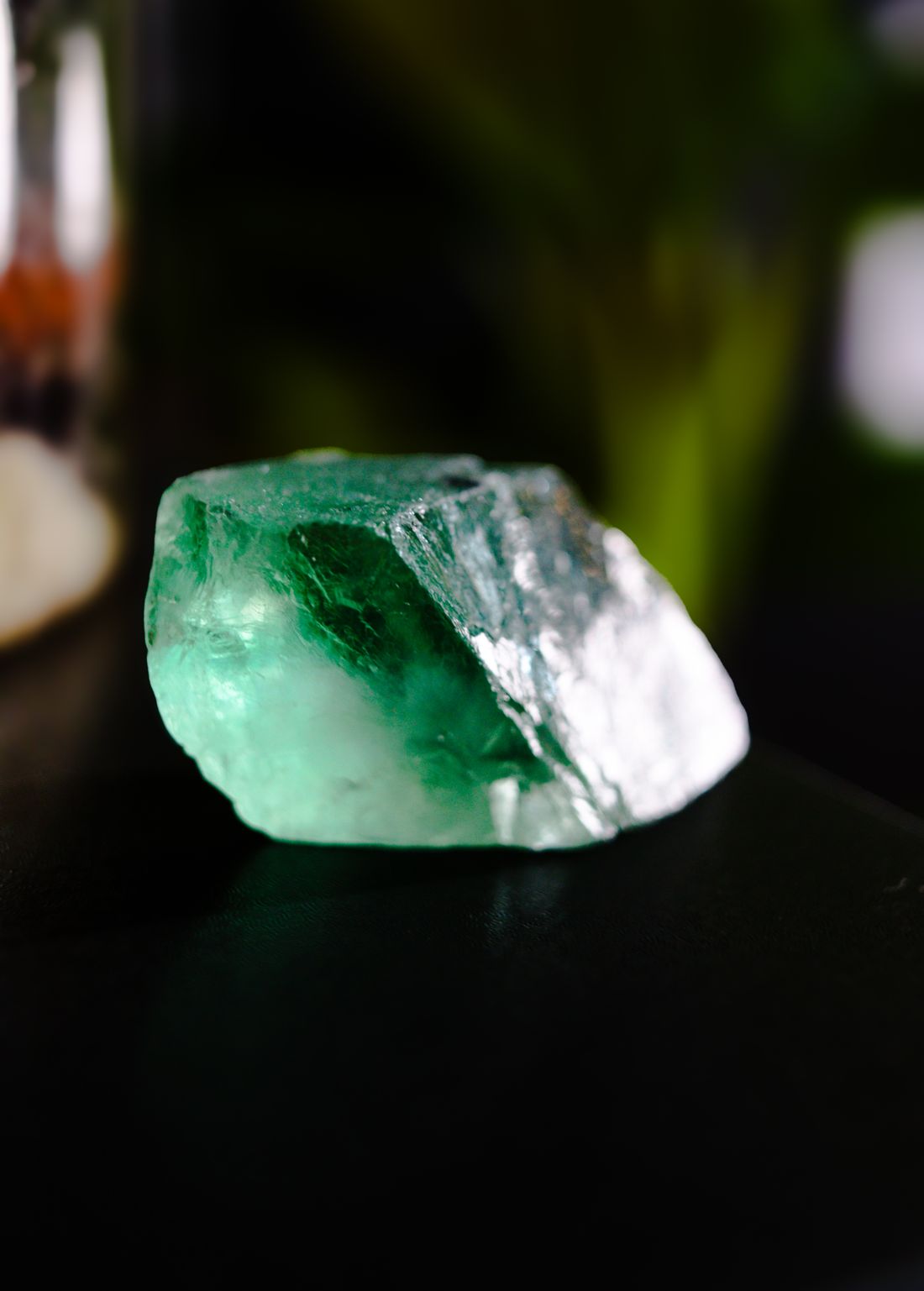
Tsavorite is a vivid green grossular garnet coloured by vanadium and chromium. It was discovered in the Taita Taveta region in the late 1960s and named after Tsavo National Park. Its brilliance and refractive index exceed emerald's, and it is rarely treated. Clean stones above 2 carats are rare and command high prices. We offer rough parcels and calibrated cut stones through licensed dealers.
Sample priced on invoice Quote this type
| Mineral | grossular garnet, Ca₃Al₂(SiO₄)₃ (V, Cr coloured) |
|---|---|
| Colour | light mint to deep forest green |
| Hardness (Mohs) | 7–7.5 |
| Refractive index | approx. 1.74 |
| Specific gravity | approx. 3.6 |
| Treatment | typically untreated |
| Forms | rough (by gram), calibrated & free-size cut (by carat) |
| Reports | GIA / AIGS / GRS on request |
| Origin | Taita Taveta, Kenya |
Type 2 of 8
Rough and cabochon-grade ruby and sapphire from southern Kenya.
Kenya produces ruby and sapphire (corundum) in Taita Taveta, Kajiado and West Pokot. Material ranges from facet-grade rough to cabochon and specimen quality, with rubies typically showing deep pink-red to purplish-red tones. Parcels are graded by colour, clarity and size and sold with full permits.
Sample priced on invoice Quote this type
| Mineral | corundum, Al₂O₃ (Cr = ruby; Fe/Ti = sapphire) |
|---|---|
| Hardness (Mohs) | 9 |
| Refractive index | approx. 1.76–1.77 |
| Specific gravity | approx. 4.0 |
| Grades | facet, cabochon, bead, specimen |
| Treatment | unheated rough; disclose any treatment |
| Sold | by gram (rough) or carat (cut) |
| Origin | Taita Taveta, Kajiado, West Pokot |
Type 3 of 8
Purple-red rhodolite, mali and spessartite garnets.
Kenya mines several garnet varieties: rhodolite (purplish-red pyrope-almandine), mali garnet, spessartite (orange) and colour-change garnets. They offer strong colour and brilliance at accessible prices, making them popular with cutters and jewellery manufacturers.
Sample priced on invoice Quote this type
| Minerals | pyrope-almandine (rhodolite), spessartite, mali (grossular-andradite) |
|---|---|
| Colours | purple-red, raspberry, orange, colour-change |
| Hardness (Mohs) | 7–7.5 |
| Refractive index | approx. 1.74–1.80 |
| Sold | rough parcels by kg/gram; cut by carat |
| Origin | Taita Taveta, Kwale, Turkana |
Type 4 of 8
Coloured stones for cutters and jewellery manufacturers.
Kenya's gem belts also produce coloured tourmaline (green, pink, bi-colour), blue aquamarine, purple amethyst and blue kyanite. These are supplied as rough parcels for cutters and as mineral specimens for collectors and crystal retailers.
Sample priced on invoice Quote this type
| Tourmaline — hardness 7–7.5, RI 1.62–1.64 | |
| Aquamarine (beryl) — hardness 7.5–8, RI 1.57–1.58 | |
| Amethyst (quartz) — hardness 7, RI 1.54–1.55 | |
| Kyanite — hardness 4.5–7 (directional), RI 1.71–1.73 | |
| Grades | facet, cabochon, specimen, tumble |
|---|---|
| Sold | rough parcels by kg / gram |
Type 5 of 8
Only via licensed dealers with export permit, assay certificate and refinery acceptance.
Kenyan gold comes from licensed artisanal and small-scale mining in Migori, Kakamega, Narok and West Pokot, and from small commercial operations. Gold is exported only by licensed dealers with a mineral export permit, assay certificate, royalty payment and full KYC/AML checks on the buyer, in line with the OECD Due Diligence Guidance. Doré is shipped to accredited refineries; refined bars are LBMA-referenced.
Sample priced on invoice Quote this type
| Forms | doré bars, refined bars (where available) |
|---|---|
| Purity (doré) | typically 70–92% Au — assayed per bar |
| Assay | State Department for Mining / accredited lab + refinery re-assay |
| Pricing | LBMA spot-linked with agreed discount |
| Compliance | Mining Act 2016, export permit, royalty receipt |
| Due diligence | KYC/AML, OECD Annex II, chain of custody |
| Logistics | insured secure courier (e.g., Brink's, Malca-Amit) |
| Note | no sales without licences, assay & buyer verification |
Type 6 of 8
Natural soda ash from Lake Magadi for glass, detergents and chemicals.
Kenya's natural soda ash is produced from trona deposits at Lake Magadi in Kajiado County, one of the few natural soda-ash sources in the world. It is supplied in dense and light grades for glass, detergent and chemical manufacturing across Asia and Africa.
Sample: $1.45/kg (indicative) Quote this type Order sample
| Chemical | sodium carbonate, Na₂CO₃ |
|---|---|
| Purity | ≥ 97–99% (grade dependent) |
| Grades | dense (glass) and light |
| Bulk density | dense 0.9–1.1 g/cm³ · light 0.5–0.6 g/cm³ |
| NaCl | ≤ 0.7% · Fe₂O₃: low |
| Moisture | ≤ 0.5% |
| Packing | 50 kg bags, 1 MT jumbo bags, bulk |
| Typical 20ft FCL | approx. 25 MT |
| Origin | Lake Magadi, Kajiado |
Type 7 of 8
Natural diatomaceous earth for filtration, fillers and agriculture.
Diatomite (diatomaceous earth) is a light, porous sedimentary rock made from fossilised diatoms. Kenyan deposits near Gilgil (Kariandusi) in the Rift Valley produce material used for filtration, fillers, absorbents and natural pest control.
Sample: $1.60/kg (indicative) Quote this type Order sample
| Composition | amorphous silica, SiO₂ approx. 80–90% |
|---|---|
| Forms | natural, calcined, flux-calcined powders |
| Particle size | graded by mesh/micron |
| Bulk density | approx. 0.2–0.5 g/cm³ |
| Moisture | ≤ 6% |
| Packing | 25 kg bags, jumbo bags |
| Origin | Kariandusi (Gilgil), Rift Valley |
Type 8 of 8
Acid-grade and metallurgical fluorspar, limestone, gypsum and vermiculite from licensed sources.
Kenya has fluorspar deposits in the Kerio Valley, as well as limestone, gypsum, vermiculite and other industrial minerals. Supply depends on licensed producers' output, so availability is confirmed at quotation. Material is supplied with assay certificates.
Sample: $1.50/kg (indicative) Quote this type Order sample
| Fluorspar — acid grade ≥ 97% CaF₂; metallurgical 60–85% CaF₂ | |
| Limestone — CaCO₃ per grade | |
| Gypsum — CaSO₄·2H₂O per grade | |
| Vermiculite — graded by flake size | |
| Packing | 50 kg bags, jumbo bags, bulk |
|---|---|
| Documents | assay certificate, export permit |
| Availability | confirmed per enquiry |
| Growing / production area | Altitude | Notes |
|---|---|---|
| Taita Taveta | 500–2,200 m | Tsavorite, ruby, rhodolite and other garnets — Kenya's gemstone capital. |
| Kajiado (Lake Magadi) | 600–1,000 m | Natural trona deposits processed into soda ash. |
| Migori, Kakamega, Narok & West Pokot | 1,100–2,000 m | Artisanal and small-scale gold mining belts. |
| Kitui, Baringo & Turkana | 400–1,500 m | Coloured gemstones, vermiculite and other industrial minerals. |
| Nakuru (Gilgil) & Elgeyo-Marakwet (Kerio Valley) | 1,000–2,000 m | Diatomite and fluorspar deposits. |
Year-round, subject to licensing and mining output.
Gemstones: by parcel. Industrial minerals: from 1 × 20ft FCL (approx. 25 MT).
HS codes: 7103.10 (precious stones, rough) · 7103.91/99 (worked) · 7108.12 (gold, unwrought) · 2836.20 (soda ash) · 2512.00 (diatomite) · 2529.21/22 (fluorspar)
Market-specific guidance on ports, transit times and import requirements.
No. We only trade gold through licensed channels with export permits, assay certificates, full KYC/AML checks and refinery acceptance. Offers of 'cheap gold' without these documents are a common scam — we never operate that way.
Gemstone and gold samples are priced individually and shipped insured. We issue a pro-forma invoice with the parcel weight, lab report and permits.
Buyer guides
How to buy Kenyan gemstones and industrial minerals legally — permits, valuation, lab reports — and the warning signs of scams.
Read guide →
A buyer's overview of Kenya's top export products, how sourcing works and how goods get from Kenyan farms and factories to your port.
Read guide →Tell us the product, variety, quantity, Incoterm (FOB / CIF / CFR / DAP) and your destination port or airport. We reply with a formal quotation, usually within one business day.